When designing a new draft beer system or upgrading an existing one, it's tempting to focus on the lowest price. After all, beer towers, regulators, faucets, trunkline, and glycol chillers can represent a significant investment for any bar, brewery, restaurant, or entertainment venue.
Unfortunately, many operators discover that choosing the cheapest option often creates bigger expenses down the road.
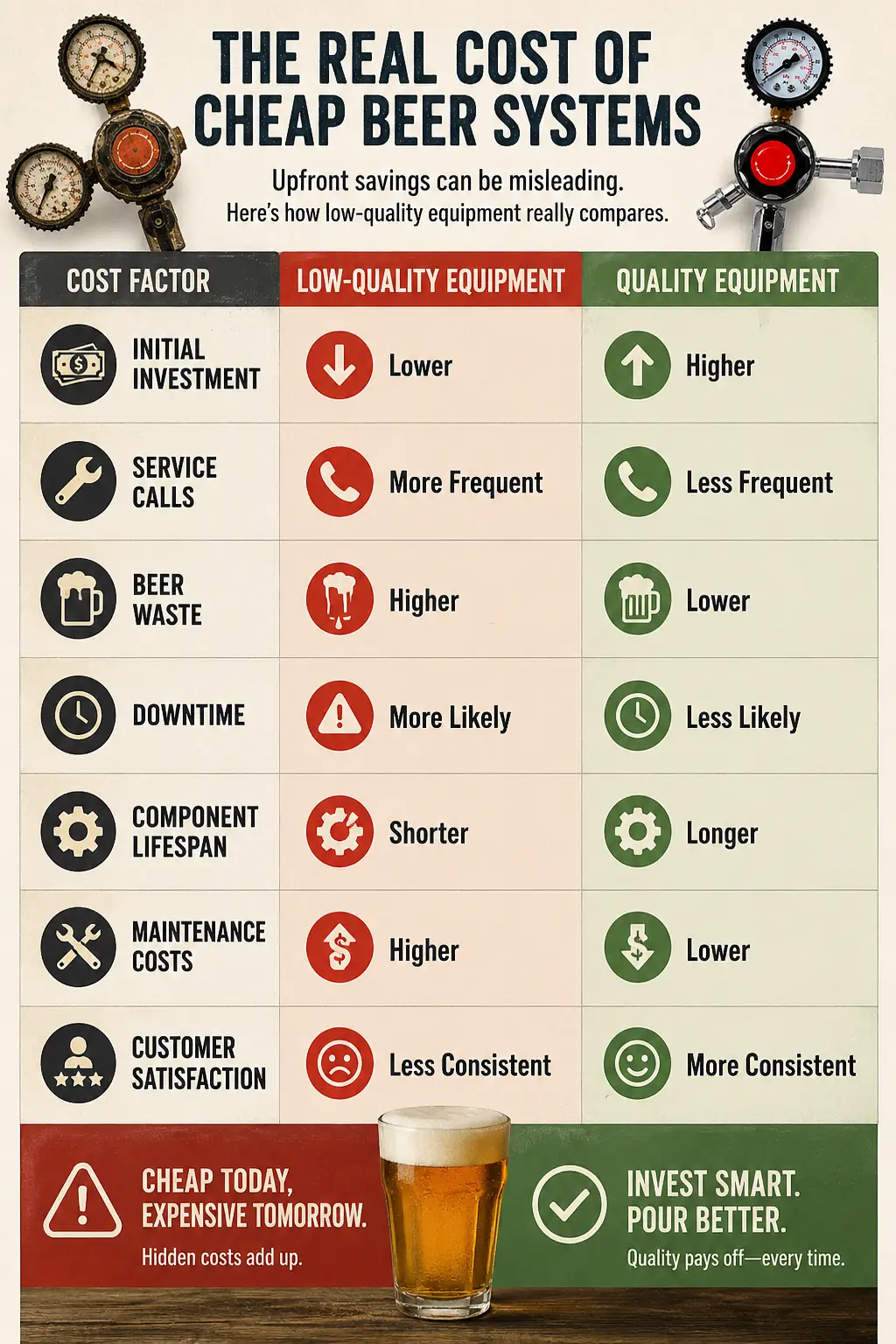
What appears to be a cost-saving decision today can quickly lead to increased service calls, wasted beer, frustrated customers, and ongoing maintenance issues. In many cases, the lifetime cost of low-quality equipment far exceeds the savings made during the initial purchase.
In this article, we'll explore the hidden costs of cheap draft beer equipment, how these expenses impact your business, and why investing in quality components can actually reduce your overall draft system costs.
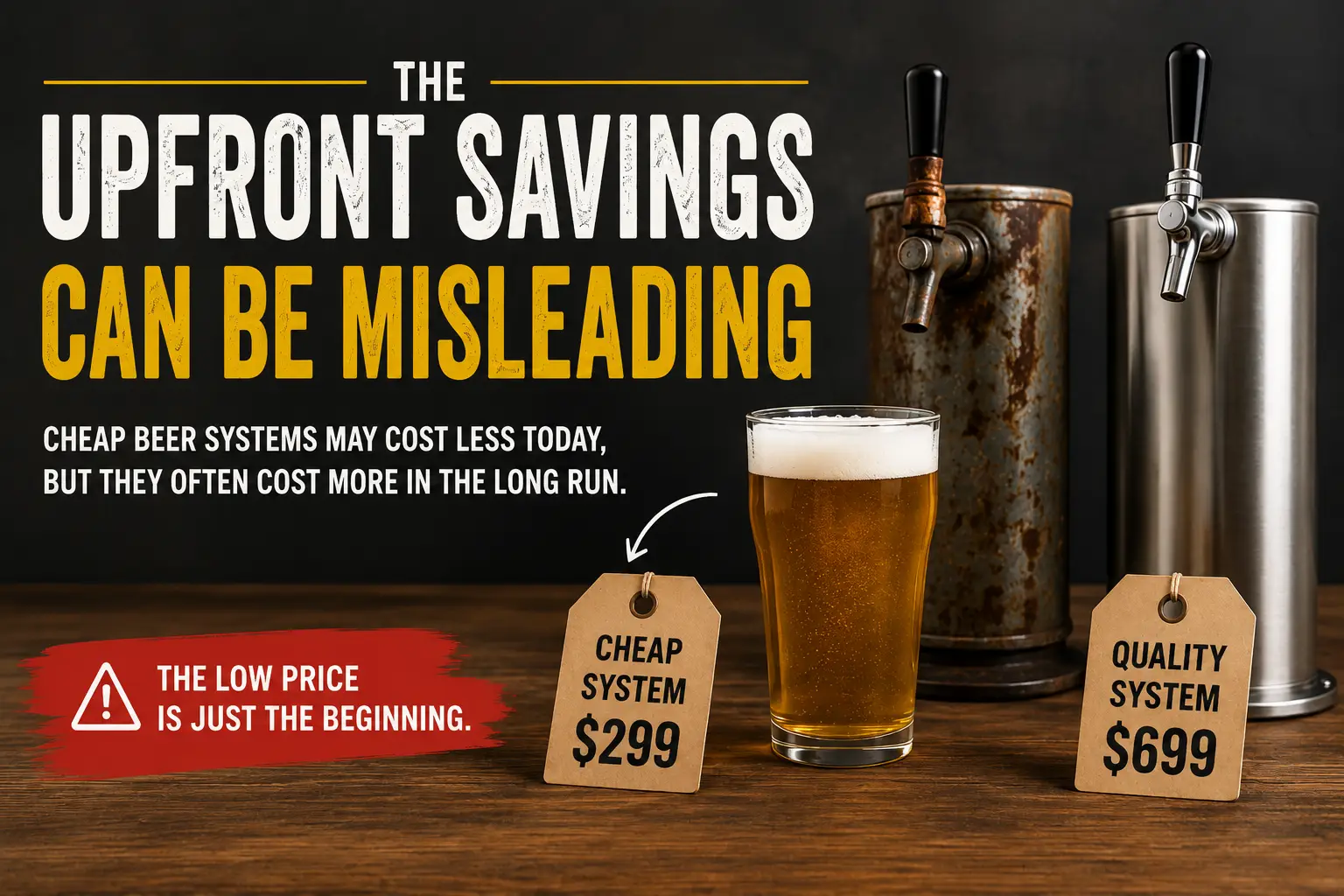
The Upfront Savings Can Be Misleading
Let's start with a simple example. Imagine you're comparing two draft beer systems:
System A costs $8,000System B costs $10,000
At first glance, System A appears to save you $2,000.
However, what happens if System A requires:
- Additional maintenance visits
- Replacement parts every year
- More beer waste
- Increased downtime
- Frequent customer complaints
Over five years, that initial savings can disappear quickly.
The reality is that the purchase price is only one component of the total ownership cost of a draft beer system.
Poor Quality Components Wear Out Faster
One of the biggest problems with inexpensive draft beer equipment is component longevity. Many low-cost systems use:
- Lower-grade metals
- Inferior seals and gaskets
- Plastic internal components
- Lower-quality valves
- Thin stainless steel
While these components may function properly when first installed, they often deteriorate faster under real-world operating conditions.
Draft systems experience constant pressure fluctuations, temperature changes, moisture exposure, and daily use. Lower-quality parts simply don't withstand these conditions as well as premium components. This often results in:
- Leaking regulators
- Sticky faucets
- Failed couplers
- Pressure inconsistencies
- Premature equipment replacement
Every repair adds to your overall operating costs.
Increased Beer Waste
Beer waste is one of the most overlooked expenses in draft systems.
When components don't perform consistently, operators often experience:
- Excessive foaming
- Slow pours
- Overcarbonated beer
- Flat beer
- Product loss during troubleshooting
Even a small amount of daily beer waste can become expensive over time.
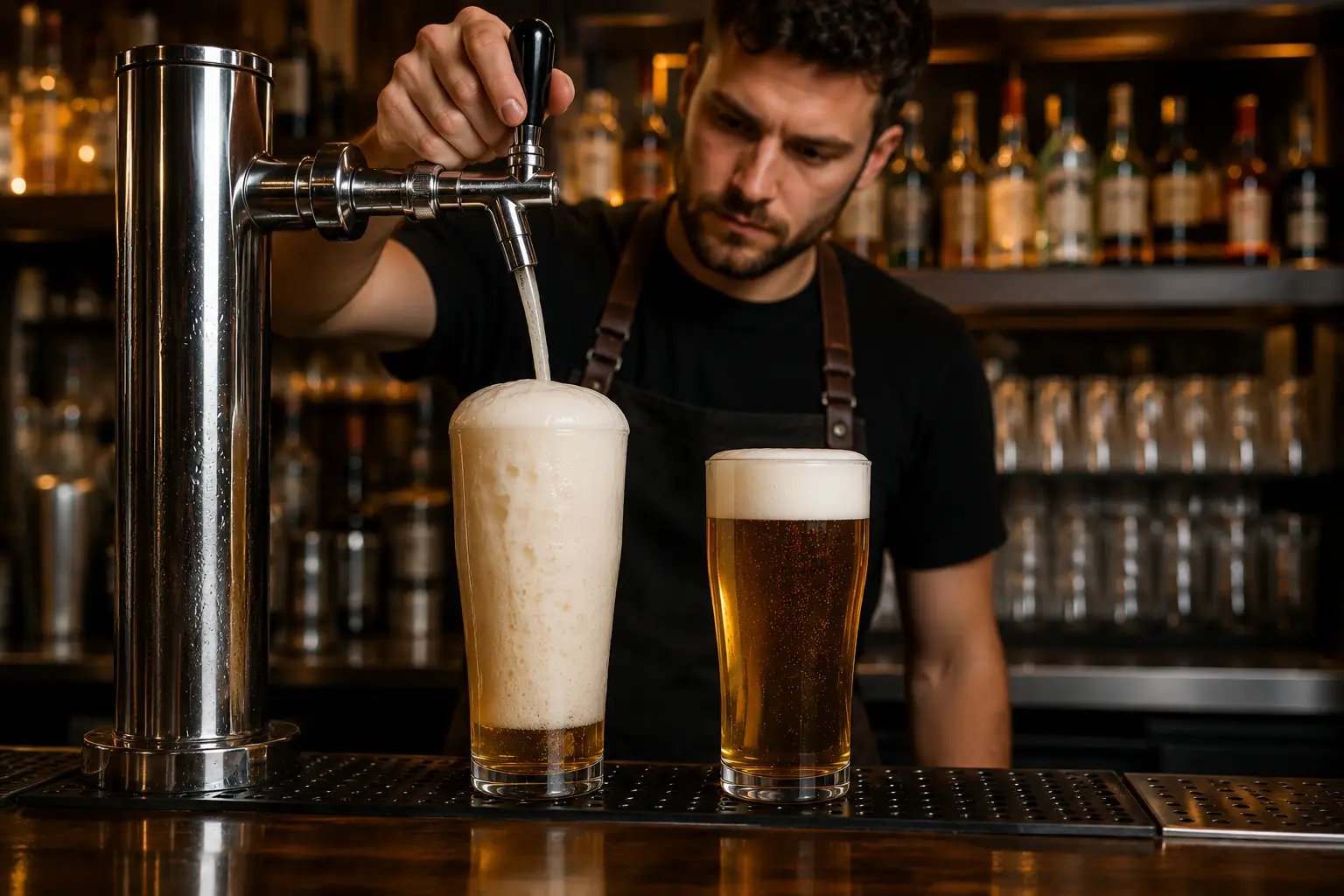
For example, losing just one pint per day equals:
- 365 pints annually
- More than 45 kegs over ten years
Depending on your beer program, this could represent thousands of dollars in lost revenue.
Many beer system problems originate from poor-quality regulators, cheap trunkline, low-grade faucets, or inconsistent temperature control.
More Frequent Service Calls
Every service call costs money. Whether you use an in-house technician or an outside service company, labor expenses add up quickly.
Cheap draft beer equipment frequently requires service for issues such as:
- Gas leaks
- Temperature problems
- Faucet failures
- Coupler malfunctions
- Regulator inconsistencies
- Glycol circulation issues
Many operators focus on equipment pricing while overlooking the ongoing cost of repairs.
A single emergency service call can easily cost several hundred dollars.
If equipment failures occur multiple times per year, your maintenance expenses can quickly exceed the original purchase savings.
Beer Quality Suffers
Your draft system is the final step before the beer reaches the customer.
Even if the brewery produces an exceptional product, poor equipment can negatively affect the drinking experience.
Common symptoms include:
- Inconsistent carbonation
- Excessive foam
- Flat beer
- Off-flavors
- Warm beer
- Uneven pours
Customers may not understand the technical cause of the problem.
They simply know that the beer doesn't taste right. When this happens, they may:
- Switch brands
- Order bottled beverages
- Visit competing establishments
The cost of losing repeat customers can be far greater than the cost difference between quality and budget equipment.
Cheap Regulators Can Create Expensive Problems
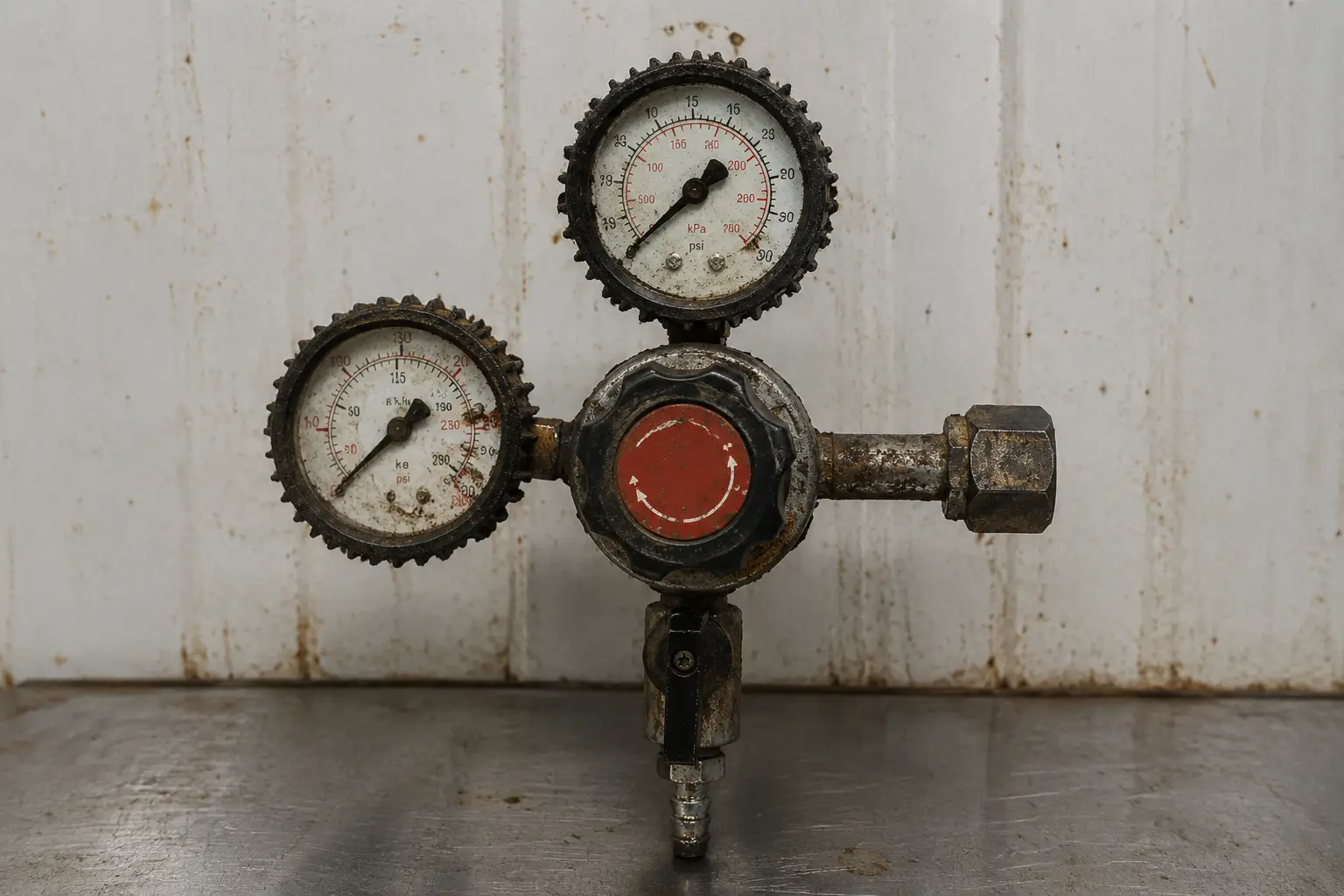
Gas regulation is one of the most critical aspects of any draft system. Consistent pressure is essential for:
- Proper carbonation
- Stable pours
- Beer quality
- Reduced waste
Low-quality regulators often experience:
- Pressure drift
- Gauge inaccuracies
- Internal leaks
- Shorter service life
A regulator that fluctuates by only a few PSI can cause persistent foaming issues that lead operators to waste beer while attempting to solve the problem.
Premium regulators are typically tested to tighter tolerances and provide more consistent performance over time.
Beer System Maintenance Costs Increase
Every draft system requires routine maintenance.
However, cheaper equipment often increases the frequency and complexity of that maintenance.
Examples include:
More Frequent Part Replacement
Lower-quality seals, O-rings, and valves wear out faster.
Additional Cleaning Challenges
Poorly manufactured components can create areas where residue accumulates.
More Troubleshooting
Technicians spend more time identifying recurring problems.
Greater Downtime
Equipment failures often take portions of the system offline.
Over several years, these expenses significantly increase overall beer system maintenance costs.
Inferior Trunkline Can Affect Beer Quality
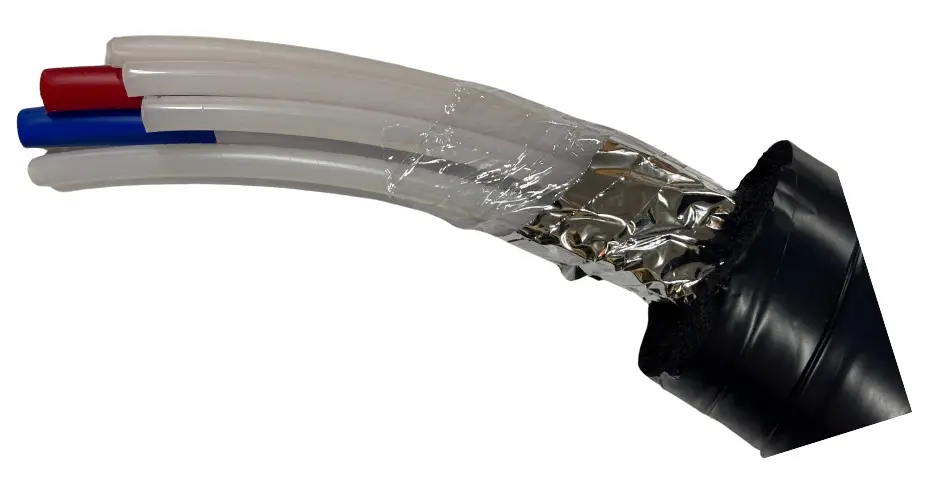
Trunkline is the backbone of long-draw draft systems.
Unfortunately, some lower-cost options sacrifice performance by using:
- Lower-quality barrier tubing
- Inadequate insulation
- Poor moisture protection
- Less durable outer jackets
Over time, these compromises can contribute to:
- Temperature fluctuations
- Flavor carryover
- Condensation issues
- Reduced system efficiency
Quality trunkline helps maintain beer temperature and product integrity from keg to faucet.
When trunkline fails, repairs are often costly because the product is installed behind walls, under floors, or above ceilings.
Cheap Faucets Can Frustrate Staff
Bartenders interact with faucets hundreds of times each week.
Low-quality faucets often develop issues such as:
- Sticking handles
- Leaking seals
- Inconsistent flow
- Difficult cleaning
These problems affect both efficiency and customer service.
When bartenders struggle to pour properly, service slows down and beer waste increases.
Premium faucets are designed for durability and smoother operation, reducing frustration for staff and customers alike.
Downtime Means Lost Revenue
One of the most expensive hidden costs is system downtime. If a draft system is partially or completely unavailable, operators may lose:
- Beer sales
- Customer satisfaction
- Event revenue
- Repeat business
A busy sports bar, brewery taproom, or restaurant can lose significant revenue during even a single evening of draft system issues.
Reliable equipment reduces the likelihood of unexpected outages and helps keep beverage programs running smoothly.
Installation Quality Matters Too
Improper installation can create issues regardless of equipment quality.
However, lower-cost systems are often paired with lower-cost installation practices.
Common shortcuts include:
- Incorrect line balancing
- Poor insulation
- Improper gas distribution
- Undersized glycol systems
- Low-quality fittings
Working with experienced draft system professionals helps ensure that equipment performs as intended.
Investing in Quality Pays Off
Quality draft systems are designed to deliver reliable performance year after year.
Benefits often include:
- Reduced beer waste
- Better beer quality
- Fewer service calls
- Longer equipment life
- Lower maintenance expenses
- Greater customer satisfaction
For bars, breweries, restaurants, hotels, and entertainment venues, draft systems are revenue-generating assets.
Choosing equipment based solely on price can create operational headaches that continue for years.
Investing in reliable, professionally designed draft beer equipment helps protect product quality, reduce beer system maintenance requirements, and lower overall draft system costs throughout the life of the system.
Summary
Cheap draft beer equipment often appears attractive because of its lower upfront cost. However, the hidden expenses associated with repairs, beer waste, maintenance, downtime, and customer dissatisfaction can quickly outweigh the initial savings.
The most successful beverage programs focus on long-term value rather than short-term pricing.
When evaluating a draft system, remember that the true cost is not what you pay on day one. The true cost is what the system costs you over its entire lifespan.
By investing in quality equipment, proper installation, and professional system design, operators can reduce maintenance headaches, improve beer quality, and maximize profitability for years to come.